Do I need planning permission for my driveway?
SuDS, the 5m² rule and the dropped kerb — the whole picture, plainly, for a Hertfordshire front garden.
6 min read · Reviewed 1 July 2026
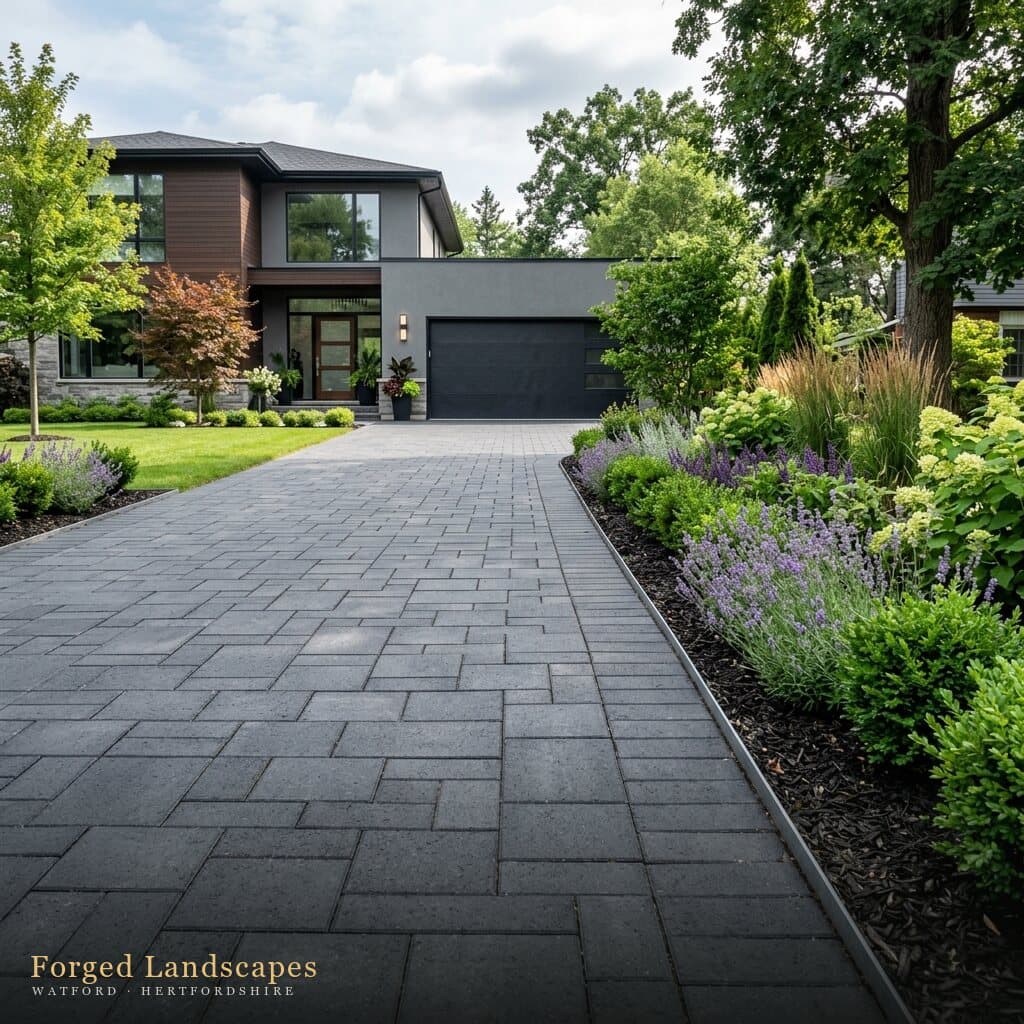
For most front gardens in England the answer is reassuringly simple: you can lay a new driveway without planning permission, as long as the water has somewhere to go other than the public road. The rule that governs this has been in place since October 2008, and it exists for one reason — to stop rainwater sheeting off thousands of paved front gardens straight into drains that then overwhelm during heavy rain.
This is the SuDS principle — Sustainable Drainage Systems — and it's the single idea behind the whole regulation. Get the drainage right and the paperwork usually looks after itself.
The 5m² rule, exactly
Paving over a front garden is permitted development — meaning no planning application — if either of these is true:
You don't need planning permission when:
- The new surface is permeable (or porous), so rain soaks through it rather than running off — permeable block paving, resin-bound over an open-grade base, or gravel all qualify; or
- Rainwater from an impermeable surface is directed to a permeable area within your own property — a lawn, a border or a soakaway — rather than to the road.
When you DO need permission
If you lay more than 5 square metres of impermeable surface (traditional concrete, tarmac or non-permeable blocks) that drains towards the highway, you need planning permission. Under 5m² of impermeable surface is fine — but there's rarely a reason to build a non-draining drive when the permeable options are better anyway.
The dropped kerb is a separate question
This trips people up constantly. Whether or not your driveway surface needs planning permission, creating or widening a vehicle crossover — the dropped kerb you drive over to get from the road onto your drive — needs its own approval from the highway authority. In this area that's Hertfordshire County Council, or your borough for some roads.
It's a licensed piece of work: the footway has to be built to the council's specification by an approved contractor, because it carries pedestrians and, underneath, utilities. We handle the crossover application and the licensed build alongside the driveway itself, so it's one project, not two.
When permitted development doesn't apply
A few situations remove the automatic right, and they're worth checking before you commit:
- Conservation areas and listed buildings — sympathetic materials are often expected, and permitted development rights can be restricted.
- Article 4 directions — some streets have had permitted development rights formally withdrawn by the council; a quick check with local planning confirms it.
- Flats and maisonettes — the householder permitted development rules don't apply in the same way.
How we design compliance in
Every driveway we design is SuDS-compliant from the first sketch — permeable block, resin-bound over an open-graded sub-base, or engineered falls to a soakaway sized to your actual roof-and-drive run-off, not a guess. That keeps you inside permitted development and, more importantly, means your drive drains properly for the next twenty winters.
Guide pricing, so you can plan: block-paved driveways from around £130/m², resin-bound from around £120/m² over a sound base, permeable systems from around £145/m². A dropped kerb application and build typically starts around £1,800. These are guides — a survey turns them into a fixed, itemised figure.
Asked often
Straight answers
No. A permeable or porous driveway — permeable block, resin-bound over an open-grade base, or gravel that drains within your property — is permitted development at any size, because the rainwater soaks away rather than running to the road.
Gravel is permeable, so a gravel driveway is permitted development as long as the water drains within your own boundary. The practical issues with gravel are migration and weeds, which good edging and a bound or stabilised system solve.
Yes. A new or widened vehicle crossover always needs approval from the highway authority (Hertfordshire County Council or your borough) and must be built to their specification by an approved contractor — regardless of whether the driveway surface itself needs planning permission.
Only up to 5 square metres. More than 5m² of impermeable surface draining to the highway needs planning permission. In practice a permeable design avoids the application entirely and drains better, so it's almost always the route we recommend.
From guide to garden
Three questions, a postcode check, and a proper plan.
No obligation, no pressure — just a clear next step whenever you're ready.
Related services